Soci–316
SOCIAL RESEARCH

Course Description
This course introduces students to the range of methods that sociologists use to understand humans as social beings. It explores the strengths and weaknesses of these methods, emphasizing the general logic of social inquiry and research design rather than narrowly defined techniques and statistical proofs. With this knowledge in hand, students will design an original research project by the end of term.
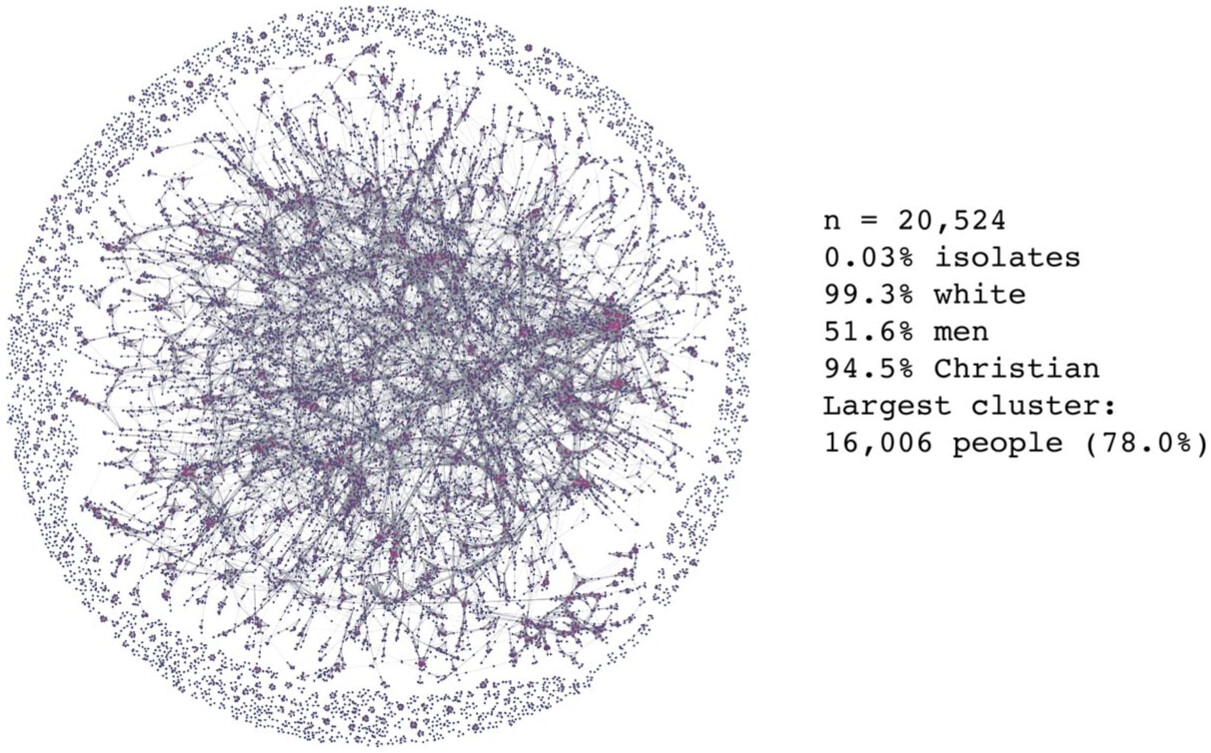
Figure 1 in O’Brien (2026)Structure
This course is designed to provide a streamlined overview of the logic of sociological inquiry and familiarize students with the range of research methods used by sociologists today. The course itself can be partitioned into four major modules or units1:
| Unit I will provide a high-level overview of quantitative approaches to sociological inquiry and briefly address their epistemological foundations. Specifically, we will cover survey research, social statistics, experiments, causal inference, computational text analysis, and more. |
| Unit II shifts focus to qualitative methods in sociology and cognate fields. This section will include a brief discussion of the craftsmanship required for good qualitative research (e.g., cognitive empathy) and feature a series of guest lectures from researchers with expertise in ethnography, in-depth interviews, content analysis, and other qualitative techniques. |
| Unit III spans two weeks and will provide an opportunity for students to refine their research proposals, share updates on their progress, and offer constructive feedback to peers as they develop projects of their own. We will only meet once per week during this unit. |
| Unit IV will feature a series of in-class presentations related to your research proposals. |
Units I and II of the class—as well as our prelude and interlude—will follow a simple structure. On most days, I will begin with a basic lecture informed by the week’s readings. Then, students (i.e., all of you) will take centre stage. Working in small groups, you will respond to the questions or prompts I provide. These prompts will encourage you to connect lecture material to the research proposal you are developing throughout the term. Each synchronous session will conclude with a plenary discussion, where we will explore the themes that emerged during small group conversations.
Readings
| The Art and Science of Social Research (Carr et al. 2020) |
| Causal Inference: The Remix (Cunningham 2026) |
| Text as Data: A New Framework for Machine Learning and the Social Sciences (Grimmer et al. 2022) |
| Data Analysis for Social Science: A Friendly and Practical Introduction (Llaudet and Imai 2023) |
| Qualitative Literacy: A Guide to Evaluating Ethnographic and Interview Research (Small and Calarco 2022) |
| Data Analysis in Qualitative Research: Theorizing with Abductive Analysis (Timmermans and Tavory 2022) |
Supplemental readings are available through the mystifying power of Moodle. As you plan for the semester, it may be useful to bookmark the eReserves page on our course website. New readings may be introduced as the world around us evolves, whether via the incremental march of science or in response to social, economic and political shocks that warrant further reflection.
Optional Readings
As a forewarning: readings underlined in the Weekly Schedule section are optional.
Evaluations
A Bird’s Eye View
| Task | Description | Weight | Deadline or Evaluative Time Horizon |
|---|---|---|---|
| Participation | This is a small research seminar. Ergo, class participation is vital. Students must actively engage in class discussions—sharing their thoughts, providing feedback to peers, asking clarifying questions, and keeping me (i.e., the course instructor) abreast of any developments vis-à-vis their research proposal. | 20% | Evaluated during class sessions throughout the term. |
| Memo on Research Interests |
Students are required to submit a concise, 500-word reflection detailing their research interests. In this reflection, students should specify the kinds of social phenomena they would like to scrutinize in their final proposal—fertility behaviour, sexuality, affective polarization, artificial intelligence, cultural consumption, international migration, economic inequality, carceral policy, inter alia. | 5% | Friday, September 18th at 8:00 PM. |
| Qualtrics Survey | In pairs, students will design a 5 to 10-minute Qualtrics survey on a topic that meaningfully blends or integrates their research interests. The survey will be evaluated on both substance (e.g., how well survey items capture the latent constructs of interest) and design (e.g., clarity, avoidance of clutter, and appropriate use of forking sequences). Additional guidelines can be found here. | 15% | Friday, October 16th at 8:00 PM. |
| Annotated Bibliography | Students must submit an annotated bibliography towards the end of October. This annotated bibliography will, in principle, directly inform—or serve as the foundation for—the literature review they include in their final research proposal. In the bibliography, students must identify at least 10 sources germane to their topic of interest. For each source, students must provide a 100–150-word summary of the key argument(s) proffered by the author(s). Additional guidelines can be found here | 10% | Friday, October 30th at 8:00 PM. |
| Conversation About Proposed Methodology |
Students must engage in a brief, 20-minute conversation (with yours truly) where they will outline how the theoretical propositions motivating their proposed study—that is, their main arguments or claims—will be subjected to empirical scrutiny. | 10% | Week of November 16th. |
| Final Presentation | In Unit IV of the class, students will deliver a 10–15-minute presentation on the research project they have developed over the term. Detailed guidelines will be uploaded later in the semester. | 10% | During Unit IV. |
| Final Research Proposal | Students are required to submit a detailed, 15-25 page research proposal (double spaced) on a topic of their choice, subject to the approval of the course instructor. The chosen topic must be related to the study of human societies and fall within sociology’s broad intellectual mandate. Detailed guidelines will be added online in the coming months. | 30% | Deadline for Comments Monday, December 14th at 8:00 PM Hard Deadline Friday, December 18th at 8:00 PM. |
Guidelines for key deliverables will be gradually uploaded online as deadlines come into focus.
Guidelines for Qualtrics Survey Assignment
Guidelines for your Qualtrics survey assessment are available here or the button below.
Guidelines for Annotated Bibliography Assignment
Guidelines for your annotated bibliography assessment can be accessed here or by clicking the button below.
Norms, Rules & Regulations
Please review the Amherst College Honor Code, which can be accessed here.
Violations of the Honor Code will be promptly reported to the Dean of Students. As Section 1.1 of the Honor Code indicates, plagiarism is a serious offense. In most cases, students who plagiarize the work of others will fail this class and may face additional disciplinary penalties. Moreover, as detailed in Sections 1.2 to 1.4 of the Honor Code, students must respect others in the classroom, including those whose views deviate from their own. Failure to do so will prompt disciplinary action.
Generative artificial intelligence (GAI) tools are proliferating. At colleges and universities, chatbots like ChatGPT, Claude, and Gemini are increasingly used by students and researchers alike. This represents a profound ethical quandary, with some speculating that our reliance on AI will produce an epistemic crisis that deepens sectarian conflict, impoverishes democratic institutions, and accelerates environmental degradation. Others believe this view is naively alarmist—a kind of reactionary aversion to change that inevitably emerges in the fog of technological revolutions that destabilize our taken-for-granted assumptions about how the world works. I have my own opinions,2 and you are free to have yours.
2 I happen to generally agree with what Andrew Heiss writes here, but lean more agnostic. As I will discuss in class, large language models have been deployed in some of my ongoing research projects.
Whatever your orientation towards AI, we must acknowledge that the floodgates have opened. GAI tools are everywhere and thus difficult to avoid. The College has even provided access to Gemini and Notebook LM to all students, faculty, and staff. Consequently, you are free to use ChatGPT and its analogues for class assignments, but you must cite the GAI you are using. Failure to do so is plagiarism.
To reiterate:
If you use a GAI tool (like ChatGPT or Claude) and do not cite it, it is a form of plagiarism.
You are expected to attend each and every class. If you do not, you will lose points for participation. That said, I am aware that you are all human beings whose lives are often fraught with uncertainty. If something comes up, please let me know and I will do my best to be as accommodating as possible. Extended absences may, however, require additional documentation (e.g., note from a physician).
Provisionally, I have decided to allow students to use laptops and tablets in class. This is, however, highly conditional. If I observe students using their electronic devices for non-academic pursuits (e.g., shopping, consuming social media and so on), I will institute a sweeping ban on electronics.
Do not be the one to contravene our social contract.
On weekdays, I will respond to emails within two days. If I fail to meet this standard, please send me a follow-up message with a gentle reminder. On weekends3 and breaks, I will not respond to emails unless you have an emergency. If you do, please remember to include EMERGENCY in the subject line.
3 Concretely, Friday at 5:00 PM to Monday at 8:00 AM.
Assignments must be submitted on time. A late submission will result in a penalty of 5% for each day beyond the deadline.4 However, as noted, I am well aware that life can present unexpected challenges. If you anticipate missing a deadline or have an emergency, please let me know soon as you can. Extensions may be granted on a case-by-case basis.
4 If an assignment is due at 8:00 PM and you submit it at 8:01 PM, you will be considered a day late and lose 5%.
A Note On Office Hours
I will hold my in-person office hours on Fridays from 12:30 to 2:30 PM in Morgan Hall (Room 306), although students can also schedule meetings during an Open Meeting Slot.5 All meetings—even during office hours—must be scheduled via Google Calendar.
5 Generally via Zoom.
To reiterate:
All meetings, even during office hours, must be scheduled in advance via Google Calendar.
Need Directions? (Click to Expand and/or Close)
Accessibility and Accommodations
If you require accommodations, contact Student Accessibility Services as soon as possible and submit an application through the AIM Portal. More generally, if you have any suggestions about how this class can be more accessible or inclusive, please let me know.
Weekly Schedule
As noted, supplementary readings can be accessed via the eReserves page on Moodle.
Readings underlined below are optional.
Dates highlighted below mark scheduled guest lectures.
Hover your pointer over the highlighted date for more information.
Prelude
Week 2: Theory and Practice
September 8th & September 10th
The Art and Science of Social Research (Carr et al. 2020)
- Chapter 2
- Chapter 4
Transcending General Linear Reality (Abbott 1988)
Kinship Interlocks: How the Intimate Exchange of Wealth, Status, and Power Generates Upper-Class Persistence
(O’Brien 2026)
Inequality without Groups: Contemporary Theories of Categories, Intersectional Typicality, and the Disaggregation of Difference
(Monk 2022)
No Assigned Readings.
Unit I: Quantitative Social Research
Week 3: Surveys
September 15th & September 17th
The Art and Science of Social Research (Carr et al. 2020)
- Chapter 6
Data Analysis for Social Science: A Friendly and Practical Introduction
(Llaudet and Imai 2023)
- Chapter 3—Sections 3.1 to 3.22
The Art and Science of Social Research (Carr et al. 2020)
- Chapter 7
Memos are due by 8:00 PM on Friday, September 18th.
Week 4: Causal Inference
September 22nd & September 24th
Data Analysis for Social Science: A Friendly and Practical Introduction
(Llaudet and Imai 2023)
- Chapter 2
The Art and Science of Social Research (Carr et al. 2020)
- Chapter 8
Causal Inference: The Remix (Cunningham 2026)
Week 5: Data Analysis
September 29th & October 1st
Data Analysis for Social Science: A Friendly and Practical Introduction
(Llaudet and Imai 2023)
- Chapter 3—Sections 3.3 to 3.6
- Chapter 4
- Chapter 5
Researcher Reasoning Meets Computational Capacity: Machine Learning for Social Science (Lundberg et al. 2022)
Machine Learning for Sociology (Molina and Garip 2019)
Week 6: Computational Text Analysis
October 6th & October 8th
Text as Data: A New Framework for Machine Learning and the Social Sciences
(Grimmer et al. 2022)
- Chapter 2
From Ends to Means: The Promise of Computational Text Analysis for Theoretically Driven Sociological Research (Bonikowski and Nelson 2022)
The Geometry of Culture: Analyzing the Meanings of Class
Through Word Embeddings (Kozlowski et al. 2019)
Start Generating: Harnessing Generative Artificial Intelligence for Sociological Research (Davidson 2024)
Integrating Generative Artificial Intelligence into Social Science Research: Measurement, Prompting, and Simulation (Davidson and Karell 2025)
Interlude
Unit II: Qualitative Social Research
Week 8: Qualitative Literacy and Data Analysis
October 20th & October 22nd
Qualitative Literacy: A Guide to Evaluating Ethnographic and Interview Research
(Small and Calarco 2022)
- Chapter 1
Note (Click to Expand/Close)
The chapter on Cognitive Empathy, not the Introduction. - Chapter 2
Qualitative Literacy: A Guide to Evaluating Ethnographic and Interview Research
(Small and Calarco 2022)
- Chapter 3
- Chapter 4
- Chapter 5
Data Analysis in Qualitative Research: Theorizing with Abductive Analysis
(Timmermans and Tavory 2022)
- Chapter 5
- Chapter 6
Data Analysis in Qualitative Research: Theorizing with Abductive Analysis
(Timmermans and Tavory 2022)
- Chapter 1
- Chapter 4
Week 9: Insights From Experts
October 27th & October 29th
To Be Determined.
Meanings of Mobility: Family, Education, and Immigration in the Lives of Latino Youth (Schmalzbauer 2023)
- Introduction
- Chapter 4
Annotated bibliographies are due by 8:00 PM on Friday, October 30th.
Week 10: Insights From Experts (cont.)
November 3rd & November 5th
Analyzing Social Settings: A Guide to Qualitative Observation and Analysis
(Lofland and Lofland 1995)
- Chapter 1
Three Pathways of the Creative Process: How Cognition, Interaction, and Relationships Facilitate Culture Creation in Songwriting Teams
(Price 2023)
- Introduction
- Conclusion
Between Two Rituals: Face and Effervescence as Moments of Social Life (Vassenden et al. 2026)
- Methodological Appendix B
Crushing Victories: Environmental Health Activism and the Hazardous Politics of Expertise (Lévesque 2026)
- Introduction
- Methodological Appendix
Unit III: Informal Discussions
Week 11: Informal Discussions
November 12th
No Assigned Readings.
Week 12: Informal Discussions (cont.)
November 19th
No Assigned Readings.
We will hold our one-on-one conversations during this week (i.e., Week 12). When will they take place? You have two options—you can either:
Schedule a meeting on Tuesday, November 17th by clicking here.
Schedule a meeting during my in-person office hours on Friday, November 20th.
Week 13: Thanksgiving Break
November 24th & November 26th
Unit IV: Final Presentations
Week 14: Presentations
December 1st & December 3rd
No Assigned Readings.
Week 15: Presentations
December 8th
No Assigned Readings.
Final proposals are due by 8:00 PM on Monday, December 14th for those who would like feedback. The hard deadline for final proposals is 8:00 PM on Friday, December 18th.
Should be available within 24 hours of a class session.
Prelude
Week 1
Week 2
Unit I: Quantitative Social Research
Week 3
Week 4
Week 5
Week 6
Introduction to Computational Text Analysis
by Terrence Chen and Jintae Bae
Optional Readings
Just to drive the point home: underlined readings are optional, not required.